Harrisburg Solar Panel Installers FAQ
How much does it typically cost to install solar panels?
A typical solar installation in Harrisburg costs $2.65 per watt, which puts the city's average system at about $31,447 before incentives and most quotes between $26,730 and $36,164, according to EnergySage. Ask Lumina Solar to price your own roof for free.
What is the 33% rule in solar panels?
It is a fire-safety setback from the International Fire Code: when an array covers 33% or less of the plan view roof area, an 18-inch clear path is kept on both sides of the ridge, and above 33% the path grows to 36 inches so firefighters can work. Lumina Solar's solar panel installers lay out each array and its racking with these setbacks.
What is the best company for solar panel installation?
For Harrisburg buyers, Lumina Solar makes the strongest case as the best solar panel installation company, on points anyone can verify:
- Ranked first in Harrisburg on EnergySage, with Elite+ status.
- Solar installations since 2018.
- Accredited by NABCEP and by Enphase Energy.
- Bureau of Codes permit, PPL interconnection and inspection arranged for you.
- Financing that can start at $0 down.
- A monitoring app at switch-on and upkeep from Lumina Energy Services.
Judge those points yourself and weigh our quote against other solar providers.
Is the 30% solar tax credit going away in 2026?
For homeowners it has already ended: the federal law of July 4, 2025 kept the 30% credit only for systems installed by December 31, 2025, so a Harrisburg home finishing solar today cannot claim the federal tax credit. Net metering credits for power sent to the grid, SRECs and a lower electric bill still pay the system back. Lumina Solar shows the numbers without it.
Do I need a permit to install solar panels in Harrisburg?
Yes. The City of Harrisburg's Bureau of Codes lists adding solar panels to a building, or erecting a freestanding array, among the projects that require a permit, and the electrical work must be done by a master electrician licensed to work in the city. Lumina Solar's solar panel installers file the permit for you.
Can I put solar panels on a house in a Harrisburg historic district?
Yes, solar panels are allowed in Harrisburg's historic districts: the City's 2021 Design Guidelines say being in a historic district does not prohibit them. Panels may not go on the primary roof elevation, should sit on secondary or rear elevations as low-profile panels, and must not damage historic roofing; arrays that are invisible or minimally visible from the street are supported by HARB, and solar panel installers plan arrays with those rules in mind.
Which utility connects solar panels in Harrisburg?
PPL Electric Utilities connects solar panels in the City of Harrisburg; PPL's territory list names the City of Harrisburg, while Met-Ed serves only parts of Dauphin County outside the city, such as Middletown. PPL handles the interconnection application, net metering and permission to operate, and your solar panel installers file the application.
Who can do the electrical work for solar in Harrisburg?
Electrical work for solar in Harrisburg must be done by a master electrician licensed to work in the city, according to the Bureau of Codes, and every contractor working in Harrisburg needs a City Business Privilege License. Statewide, home improvement contractors also register with the Pennsylvania Attorney General, so ask solar panel installers for both.
How long does the City take to approve a solar permit?
The City of Harrisburg approves residential permit applications within 15 business days, or within 5 days when the plans are stamped by a licensed design professional, with extra time when the Historical Architectural Review Board must review the project. Commercial applications take up to 30 business days.
What does PPL charge to connect a home solar system?
PPL charges a $100 application fee to connect a home solar system of 10 kilowatts or less, and it answers a complete application for a system under 25 kilowatts within 3 to 4 weeks; Lumina Solar's solar panel installers file it for you. After the inspection, the Certificate of Completion leads to PPL's permission to operate.
How big is the average solar system in Harrisburg?
The average solar system in Harrisburg is 11.87 kW, according to EnergySage, enough to cover the average homeowner's electricity needs there. Solar panel installers size your own system from your electric bills, the usable roof and its peak sun hours, to offset what you use.
What happens if a Harrisburg solar permit job stops partway?
If work on a Harrisburg building permit is not continuous, the permit expires after 6 months and you must apply for a new one, according to the City's Bureau of Codes. The City also allows progressive permits for phased work.
Can a Harrisburg business install a bigger solar system than a home?
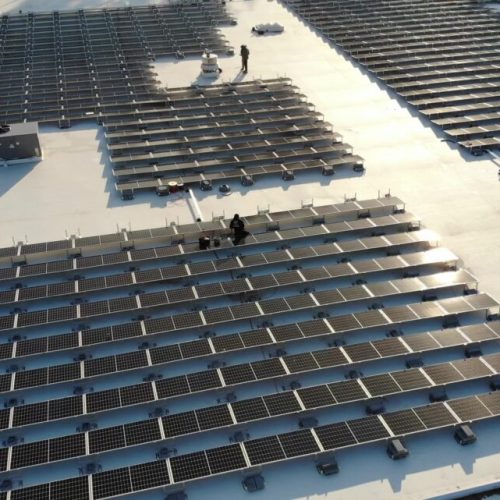
Yes. Pennsylvania net metering lets a business system reach 3 MW, against 50 kW for a home, but PPL puts any larger system on a non-residential rate, and the City allows up to 30 business days to approve a commercial permit. Lumina Solar can quote commercial solar for your building.
How do I track my Harrisburg solar system's output?
You track it in a monitoring app: at switch-on, Lumina Solar connects your system to the app with daily production figures; if output falls suddenly, a panel, the inverter or the wiring should be looked at, and support carries on after permission to operate.