OTT Code

Washington DC Solar Incentives: Eligibility, SRECs, Community Solar, Low-Income Programs, Registration Process, Tax Exemptions, Homeowners

Washington DC homeowner outside a brick rowhouse with rooftop solar panels

Washington DC solar incentives are the credits, programs and billing rules that pay a system owner back for a solar energy system. Key aspects include SRECs, eligibility, low-income programs, community solar, tax exemptions and the registration process for homeowners. Washington DC offers no general solar rebate and no DC solar tax credit, so most of the value of solar incentives in Washington DC comes from SRECs and net metering once Pepco connects the system to the grid.

Full Name
Do you own your home?

What is 7+5?

Terms & Conditions

By providing a telephone number, email address, and submitting your information on our website, you are consenting to be contacted by phone, email, or SMS text message by Lumina Solar regarding your inquiry. Message & data rates may apply. You can STOP messaging by sending STOP and get more help by sending HELP. You can opt-out of further contact by unsubscribing at the bottom of the email or by directly communicating with us. Your privacy is very important to us. Your information will not be sold or rented to any third parties. Access our Privacy Policy here.

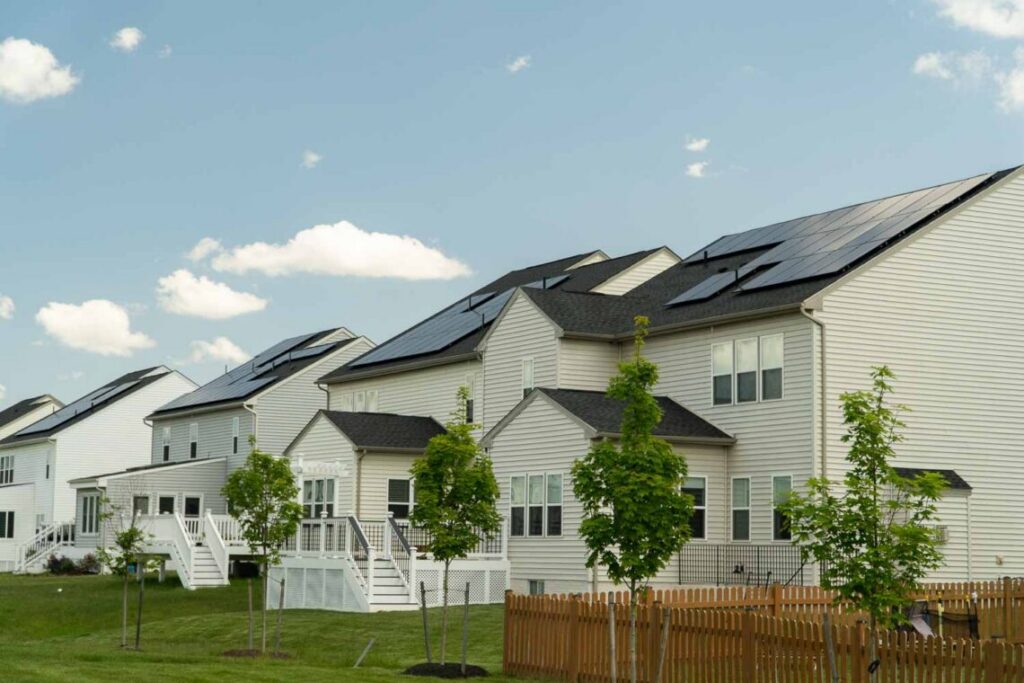
Townhouses with rooftop solar panels on a sunny day

How DC Solar Incentives Work

Most Washington DC solar incentives pay a system owner over time rather than up front. With no general rebate and no DC solar tax credit, the value comes from two sources: SRECs, which the solar energy system earns for every 1,000 kWh it produces, and net metering, which turns the power the solar panels send to the grid into credits on your electric bill. The federal tax credit for homeowners is not available for systems put into service after December 31, 2025.

Recognition

Awards & Accolades

  • Top Solar Contractors 2026 award badge

    Top Solar Contractors

    Solar Power World · 2026

  • Enphase Platinum Installer badge

    Platinum Installer

    Enphase Energy

  • NABCEP Accredited PV Installation Company badge

    Accredited PV Installer

    NABCEP

  • Better Business Bureau Accredited Business badge

    Accredited Business

    Better Business Bureau

  • Top Workplaces Construction Industry award badge

    Top Workplaces — Construction

    Top Workplaces

  • EnergySage Local Installer of the Year 2026 badge

    Installer of the Year — Local

    EnergySage · 2026

  • 2026 Best Places to Work award badge

    Best Places to Work

    Business Journal · 2026

  • Top Workplaces Innovation award badge

    Innovation

    Top Workplaces · Jun 2026

  • Top Workplaces Compensation and Benefits award badge

    Compensation & Benefits

    Top Workplaces · Jun 2026

  • Top Workplaces Employee Appreciation award badge

    Employee Appreciation

    Top Workplaces · Jun 2026

  • Top Workplaces Professional Development award badge

    Professional Development

    Top Workplaces · Jun 2026

  • Top Workplaces Purpose and Values award badge

    Purpose & Values

    Top Workplaces · Jun 2026

  • Top Workplaces Work-Life Flexibility award badge

    Work-Life Flexibility

    Top Workplaces · Jun 2026

Solar Incentive Programs

Each of the Washington DC solar incentives has its own status and rules:

Program (set by)StatusWhat it gives
SRECs (renewable portfolio standard)Open to approved DC systemsOne certificate per 1,000 kWh, sold at market price
Net metering (Public Service Commission, Pepco)Open to systems up to 1,000 kWCredits on the electric bill
Community solarProjects of up to 5 MWCredits at the full retail rate for homes
Solar for All (DOEE)Single-family applications queued (program page, November 2, 2026)Rooftop solar for income-qualified homes at no charge
Solar Advantage Plus ProgramClosed (2015 install deadline)None
DC solar tax creditNoneNone
DC tax exemptionsExempt from DC tax on business personal propertyRarely matters for a homeowner
Federal tax credit for homeownersEnded for systems put into service after December 31, 2025None for later systems
Battery storageNo general homeowner incentiveNone

DC Solar Tax Exemptions

DC solar tax exemptions are narrow: the District’s only solar tax break is a personal property tax exemption under the Energy Innovation and Savings Amendment Act of 2012, which mainly matters under third-party ownership. On November 2, 2026, DOEE’s solar page stated that the District does not offer tax incentives, and DC sources list no real property tax break, sales tax break or income tax credit, so Washington DC solar incentives for homeowners come from SRECs and net metering.

Solar Incentive Eligibility

Eligibility for Washington DC solar incentives varies:

  • SRECs: the owner needs Public Service Commission approval for a system in DC or on a feeder serving DC.
  • Net metering: a solar energy system up to 1,000 kW, sized to no more than 200% of past 12-month use.
  • Low-income program: household income at or below 80% of area median income, or a program such as SNAP, TANF, SSI, LIHEAP or WAP.
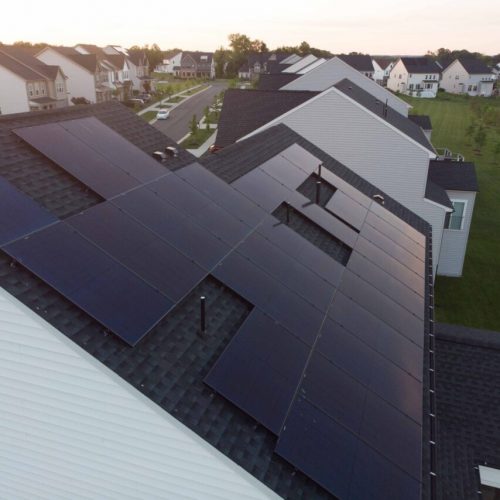
Rooftop solar panels on homes in a suburban neighborhood at sunset
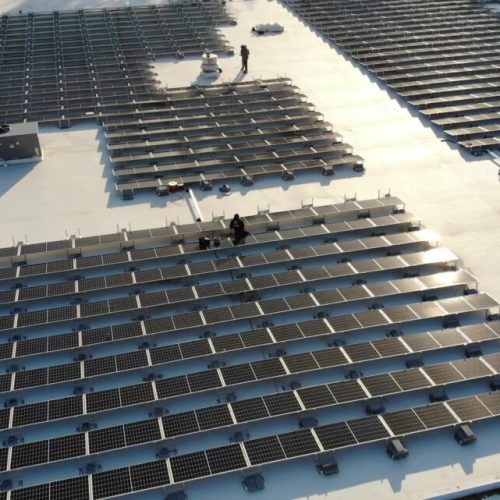
Rows of solar panels on a large flat roof

DC Low-Income Solar Programs

Washington DC solar incentives for low-income homes center on Solar for All, created by the RPS Expansion Amendment Act of 2016 and funded by the Renewable Energy Development Fund. Through DCSEU it offers no-cost installation of rooftop solar on income-qualified homes, with a goal of cutting the bills of 100,000 low-to-moderate income households by at least half by December 31, 2032. On November 2, 2026, the program’s application page showed its fiscal year 2026 notice: single-family applications go on a waitlist until further notice.

DC SRECs

DC SRECs are the Washington DC solar incentive that pays cash: under the renewable portfolio standard, a qualifying solar energy system earns one certificate for each megawatt-hour it produces, and the system owner keeps those certificates unless a contract assigns them. Electricity suppliers must buy them, or pay a compliance fee, to meet the solar carve-out, so the market, not the District, sets their price. How this part of Washington DC solar incentives works:

  1. The Public Service Commission approves the system as an eligible solar facility.
  2. The system’s production is reported in PJM-GATS, which issues one certificate per 1,000 kWh.
  3. You sell the certificates through a broker or to a buyer under contract.
  4. Each certificate stays valid for five years from generation.

Unless a contract sets the terms, you can time your sales within those five years. Ask how long a contract runs and how its price is set before you sign.

Washington DC Solar Incentives: How SREC Values Are Set

The value behind these Washington DC solar incentives comes from the District's renewable portfolio standard, as amended by the Local Solar Expansion Amendment Act of 2022:

  • Solar carve-out: 5.0% of electricity sales in 2026, rising to 15% by 2041, must come from solar systems in or serving the District; other renewable energy certificates do not count toward it.
  • Solar compliance fee: a supplier that falls short pays $440 per MWh in 2026; the fee drops $20 each year until it reaches $300 in 2033 and stays there through 2041, which caps what a certificate can be worth.
  • SREC market: prices fell from a 2025 average of about $407 per certificate to about $358 to $378 between August and early November 2026, with 373.7 MW of certified solar capacity at the end of 2025, above the roughly 293 MW the standard required.

Because supply and demand set the price, get a fresh offer before you sell.

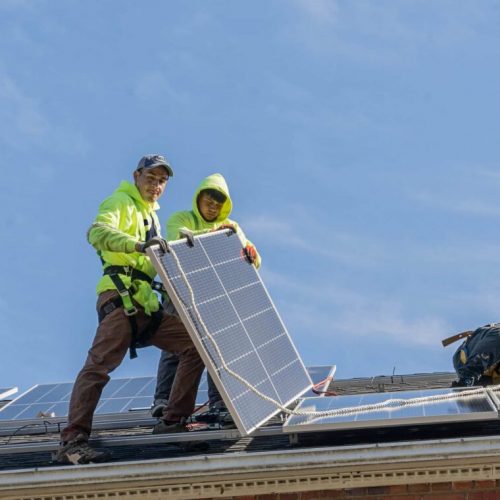
Solar panels being placed on a home's roof

DC Community Solar

DC community solar lets renters, condo owners and homes without a usable roof share in Washington DC solar incentives without solar panels of their own. A household buys a share of a community renewable energy facility (CREF), a project of up to 5 MW in the District with at least two subscribers, and the share shows up as credits on the Pepco bill; for homes each credit is worth the full retail rate, including generation, transmission and distribution. A share can cover up to 120% of the past 12 months’ use (low-income program projects are exempt), and the low-income program also places income-qualified households in community solar. Compare the contract terms before you sign.

Claiming Solar Incentives

Solar Incentive Ownership Check

Claiming Washington DC solar incentives starts with ownership, because most of them go to the system owner. When you buy the solar energy system with cash or a solar loan, you own the system and usually hold its SRECs, unless the contract assigns them. With a solar lease or a power purchase agreement, a third-party owner holds the system and usually the certificates, while net metering credits appear on the electric bill at the home. These ownership options decide which incentives reach you, so read who keeps the certificates before you choose a payment route.

Solar System Build Approval

The second step toward DC solar incentives is approval to build: the solar installer usually files a building permit with the Department of Buildings and an interconnection application with Pepco before work starts. The utility reviews the interconnection application and, once the system passes its final inspection, installs a net meter that records power in both directions.

Solar Net Metering Start

Net metering starts once Pepco grants Permission to Operate. From then on, each kWh the system sends to the grid becomes a credit on your next electric bill; on Standard Offer Service those credits offset your usage at the retail rate, while a competitive electricity supplier credits them at its own energy rate. Credits carry forward month to month. At the end of each calendar year, excess generation above your yearly use is valued at the generation rate only, and a credit worth more than $25 is refunded. The fixed customer charge remains on the bill.

PSC SREC Approval

The SREC part of Washington DC solar incentives needs Public Service Commission approval: the system owner, or the installer on the owner’s behalf, applies for RPS certification of the solar energy system. The application includes the system’s details, and only a system in DC or on a feeder serving DC qualifies. Once approved, the system can earn certificates for the electricity it produces.

Solar Credit Registration

Once approved, the solar energy system is registered in PJM-GATS, the tracking system that issues the certificates. Its production is reported there, and one certificate is issued for every 1,000 kWh the system produces. Most owners let a broker handle the account and the sales. Each certificate stays valid for five years from generation, which gives the system owner time to choose when to sell.

Selling Solar Incentive Credits

Selling the certificates is the system owner’s last step in claiming SRECs: sell them at the going price, or lock in a price under a contract. Prices follow supply and demand and in practice stay below the fee that caps them. The income from the certificates comes on top of net metering credits, so the same solar energy system earns both. Read the contract length, the price terms and who holds the certificates before you sign.

Solar Incentive Paperwork, Guided

Washington DC solar incentives come with applications at several stages of the registration process, and that is where Lumina Solar helps. Lumina Solar carries out a comprehensive review of the Washington DC solar incentives available for your home and guides you through any application requirements with expert assistance. It also gives you the information and materials that simplify claiming Washington DC SRECs, takes care of the complete permit application on your behalf, and coordinates the system inspection with the utility so the system can receive Permission to Operate. Ask Lumina Solar which incentives your home can claim.

Washington DC Solar Incentives and the Federal Credit

The 30% federal Residential Clean Energy Credit, taken against federal income tax, is not available for a solar energy system placed in service after December 31, 2025; the One Big Beautiful Bill Act, signed on July 4, 2025, ended it early, and the IRS applies the same cutoff to home batteries. Washington DC solar incentives therefore work without the federal tax credit for homeowners for any later system. For a homeowner who buys the system, that leaves SRECs and net metering, plus the low-income program for qualifying households, while homes without their own system can use community solar. When another company owns the system, ask how any business tax credit it claims affects your price.

Shingled home with rooftop solar panels among autumn trees

Washington DC Solar Incentives: Net Metering

Net metering is the Washington DC solar incentive that turns excess electricity into bill credits: Pepco’s net meter records power in both directions, and each unit of power your system sends out offsets one you use later, at the retail rate on Standard Offer Service.

Net metering rules for Washington DC homes are set by the Public Service Commission. A solar energy system qualifies up to 1,000 kW and may be sized to produce up to 200% of the home’s past 12-month use. Credits are kept in kWh and carry forward from month to month. At the end of each calendar year, generation beyond the year’s use is valued at the generation rate only, and a remaining credit worth more than $25 is refunded, while a smaller credit carries over. The fixed customer charge stays on the bill, and customers of a competitive electricity supplier are credited at that supplier’s energy rate. Match the solar energy system to your yearly use so that most credits offset your own bills.

Washington DC Solar Incentives: Battery Storage

Battery storage has no general homeowner incentive in Washington DC: DC program lists show no battery rebate, and the federal tax credit for homeowners ended for batteries put into service after December 31, 2025. A battery can work alongside the incentives that exist:

  • the solar energy system keeps earning certificates on everything it produces;
  • net metering keeps crediting what the system sends to the grid;
  • the battery stores power for the evening or during an outage.

Because net metering credits exported power month to month on the bill, a battery's main role in Washington DC is usually backup. Before adding a battery, ask whether it needs another interconnection review.

Washington DC Solar Incentives FAQ

What Washington DC solar incentives can homeowners claim?

The Washington DC solar incentives homeowners can claim are SRECs, net metering credits on the electric bill, community solar subscriptions and, for income-qualified households, Solar for All. The District offers no general rebate and no DC solar tax credit, and the federal tax credit for homeowners does not cover systems put into service after December 31, 2025. Lumina Solar carries out a comprehensive review of the incentives available for your home.

Who is eligible for DC solar incentives?

Eligibility for DC solar incentives depends on the program: SRECs need a solar energy system approved for the renewable portfolio standard in or serving the District, net metering needs a Pepco connection and a system of up to 1,000 kW, and the low-income program needs household income at or below 80% of area median income, a limit that rises with household size. Lumina Solar can check which of these rules apply to your home.

Do you have to own the system to get Washington DC solar incentives?

Not for every one of the Washington DC solar incentives, but ownership decides who keeps the SRECs: a home that buys its system with cash or a solar loan holds them, while under a solar lease or a power purchase agreement the other party usually keeps them. Net metering credits reach the electric bill at the home under each common ownership option, and community solar needs no system of your own. Ask Lumina Solar which incentives your home would keep.

How much are SRECs worth in DC?

SRECs in DC are worth what the SREC market pays: prices fell from a 2025 average of about $407 per certificate to about $358 to $378 between August and early November 2026, and the solar compliance fee of $440 per certificate in 2026 caps the SREC price. The fee drops $20 a year until it reaches $300 in 2033. Lumina Solar gives you the information and materials that simplify claiming Washington DC SRECs.

How do you register a solar system for SRECs in DC?

Registering a solar system for SRECs in DC is a two-part registration process: the Public Service Commission approves an eligible system, and the system is then registered in the regional tracking system, which issues one certificate per 1,000 kWh. Both steps usually follow once the system is installed and has Pepco's approval to operate. Lumina Solar guides you through any application requirements with expert assistance.

Does Washington DC offer solar tax exemptions?

Washington DC offers one solar tax exemption: solar energy systems are exempt from personal property tax, which rarely matters for a homeowner. DOEE's solar page stated on November 2, 2026, that the District does not offer tax incentives, and DC sources list no real property tax exemption, sales tax exemption or income tax credit for solar. Lumina Solar can review which incentives apply; for tax questions, ask a licensed tax advisor.

Do Washington DC solar incentives include a federal tax credit?

No, Washington DC solar incentives include no federal tax credit for homeowners for a system placed in service after December 31, 2025: the 30% Residential Clean Energy Credit covered systems up to that date, and the IRS applies the same cutoff to batteries. Ask Lumina Solar which incentives apply to a system installed after that date.

Do Washington DC solar incentives include no-cost solar for low-income homes?

Yes, Washington DC solar incentives include no-cost rooftop solar for low-income homes, but only through Solar for All, the program overseen by DOEE and delivered by DCSEU for homes within its income limits or enrolled in a program such as SNAP, TANF, SSI, LIHEAP or WAP. On November 2, 2026, the program's application page showed its fiscal year 2026 notice: applications for a single-family home go on a waitlist until further notice. Lumina Solar can tell you which other incentives your household can use while you wait.

Does community solar save money in Washington DC?

Yes, community solar in Washington DC can lower the electric bill: a household receives bill credits at the full retail rate for a share of a project of up to 5 MW, and DOEE estimates typical savings of 5% to 15% a year, while the low-income program's community solar aims to cut participants' bills by up to half. Ask Lumina Solar whether rooftop solar on your own home would earn more.

Do Washington DC solar incentives cover battery storage?

No, Washington DC solar incentives offer homeowners no general battery storage incentive: DC program lists show no battery rebate for homeowners, and the federal tax credit for homeowners ended for batteries put into service after December 31, 2025. A battery mainly adds backup, while the solar panels keep earning SRECs and net metering credits. Ask Lumina Solar how a battery would work with the incentives your system earns.

Are there group-buying programs for solar in DC?

DOEE supports group buying for solar in DC through the Switch Together Capital Area program with a nonprofit partner: companies compete for the group, and sign-up runs in rounds. Lumina Solar can review which incentives fit your home, however you buy.


Two-story home with rooftop solar panels at dusk

Keep Up With Washington DC Solar Incentives and Program Changes

Washington DC solar incentives depend on yearly rules, fees and funding decisions. Lumina Solar reviews the incentives that fit your home and guides you through any application requirements, so ask before you sign.

Find Out Which Washington DC Solar Incentives Fit Your Home

SRECs and net metering carry most of the value of Washington DC solar incentives for a system owner, while DC tax rules offer only a narrow tax exemption and Solar for All single-family funding was limited for fiscal year 2026. Lumina Solar reviews the solar incentives in Washington DC for your home and provides the information and materials for claiming Washington DC SRECs. Fill out the short form to get started.

Take the first step toward energy independence

Full Name
Optional
Do you own your home?
Skip to content