
Stay Current on Delaware Solar Incentives and Rate Changes
Delaware solar incentives change from time to time, like the grant rates that took effect July 1, 2026. Ask Lumina Solar what a change means for your project.



Delaware solar incentives are the state grants, credits and programs that lower what homeowners pay for a solar energy system. Key aspects include the Green Energy Grant, eligibility, rebates, the application process, SRECs, the Low-Income Program and the utility rules homeowners meet. Which solar incentives in Delaware you can use depends first on your electric utility, because each utility’s customers use a different solar rebate program, and some city utilities offer none.
Delaware solar incentives work through programs run by the state, your electric utility and Energize Delaware, not through a state tax credit. Most solar grants are paid on the size of the photovoltaic system once it is installed, SRECs pay for the power a solar energy system produces, and net metering turns extra power into credit on your electric bill. Start by checking which electric utility serves your home.

Top Solar Contractors
Solar Power World · 2026
Platinum Installer
Enphase Energy
Accredited PV Installer
NABCEP

Accredited Business
Better Business Bureau

Top Workplaces — Construction
Top Workplaces

Installer of the Year — Local
EnergySage · 2026

Best Places to Work
Business Journal · 2026

Innovation
Top Workplaces · Jun 2026

Compensation & Benefits
Top Workplaces · Jun 2026

Employee Appreciation
Top Workplaces · Jun 2026

Professional Development
Top Workplaces · Jun 2026

Purpose & Values
Top Workplaces · Jun 2026

Work-Life Flexibility
Top Workplaces · Jun 2026
Each of Delaware's solar incentive programs has its own source and rules:
| Program (run by) | Who it is for | What it pays |
|---|---|---|
| Green Energy Program grant (DNREC) | Delmarva Power customers who own their system | $0.80 per watt, up to $10,000 (from July 1, 2026) |
| Co-op and city solar grants (Energize Delaware for the co-op, DEMEC for city utilities) | Co-op members and customers of participating city utilities | Set by each electric utility |
| SRECs (Energize Delaware, utility procurement) | Owners of a solar energy system | One credit per megawatt-hour produced |
| Low- to Moderate-Income Solar Program (DNREC) | Households within the income limits | A free system up to 4 kW, or 70% of a system up to 6 kW |
| Solar + Storage Pilot Program (DNREC) | Delmarva Power customers adding a battery to solar | $250 per kWh, up to $6,000 |
| Net metering (your electric utility) | Utility customers with grid-connected solar | Bill credits for extra power |
The Delaware solar grant amount for Delmarva Power customers is $0.80 per watt, up to $10,000, from July 1, 2026; before July 1, 2026 it was $0.70 a watt, up to $6,000. The Green Energy Grant never covers more than 50% of the installed cost, and the project must cost $6.00 a watt or less. Ask which rate applies to your application before you sign.
Solar grant eligibility rules for Delmarva Power customers include these; to be eligible you need:
Solar incentives by utility follow different utility rules. Delmarva Power customers apply to the DNREC Green Energy Program, Delaware Electric Cooperative members apply through Energize Delaware, and customers of participating city utilities apply to the DEMEC Municipal Green Energy Program, where Newark homes can receive up to $3,500. Amounts and caps differ, some city utilities offer no grant, so read your utility rules before you plan the system.
Delaware SRECs are Solar Renewable Energy Credits, the Delaware solar incentive paid for production: your solar energy system earns one credit for every 1,000 kilowatt-hours it produces, and you can sell each one. They exist because the Renewable Portfolio Standard requires electricity suppliers to source part of their power from solar generators through a solar carve-out, and since 2011 Delmarva Power has been the main long-term buyer. Energize Delaware runs the SREC procurement, planned at least once a year:
Systems built with Delaware labor or Delaware-made parts can earn a 10% bonus for each, or 20% for both, as certified by the Delaware Public Service Commission. Homeowners who take the Green Energy Grant sign their credits over to Energize Delaware, so weigh that trade-off before you apply.
The Low- to Moderate-Income Solar Program is the Delaware solar incentive that pays for a system of up to 4 kW, or 70% of a system up to 6 kW, for households within its income limits, whatever their electric utility. DNREC runs it through two paths:
Income is checked against your tax return, with a 4506-C form for each adult in the household. Gather those papers first, then ask DNREC which path fits your income.
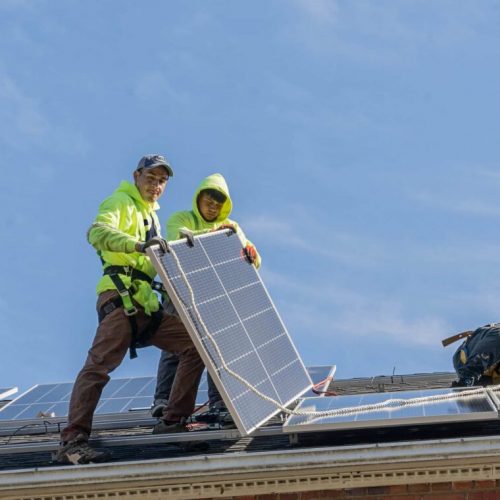
Solar incentive support from Lumina Solar starts with clear answers. Lumina Solar has helped home and business owners access the benefits of solar since 2018, with a commitment to transparent, exceptional service: your questions are always valued, and the team takes the time to walk you through each step of the move to solar energy. That approach shows in more than 400 five-star reviews on Google. For Delaware homeowners, Lumina Solar works as an approved solar company for the Green Energy Program grant. Talk to Lumina Solar about which Delaware solar incentives fit your home.
Finding your Delaware solar incentives starts with your electric utility, because the utility rules decide which solar grant program you apply to. Your electric bill names the utility: Delmarva Power customers use the state Green Energy Program, funded by a public benefits charge of $0.000356 per kilowatt-hour on those bills; co-op members apply through Energize Delaware; customers of participating city utilities apply to the municipal grant program. Households within the income limits can also check the Low- to Moderate-Income Solar Program, which is open whatever the utility. Note your utility and income bracket before you compare solar incentive programs.
The solar grant energy audit comes first among the steps to claim Delaware solar incentives through the Green Energy Program: the grant is reviewed only after an acceptable audit and once you have selected an approved contractor. The program keeps that list, and installations by contractors outside it cannot receive the grant. Ask any company you speak with to confirm it is on the current list before you sign.
Solar grant design rules shape the solar energy system before it is built, and the Green Energy Program grant only pays for an eligible design that meets them. Part 1 of the grant paperwork needs a shade analysis that rates the site at 70% or more, the total project cost must stay at $6.00 a watt or less, and no grant can exceed 50% of that cost. The grant itself grows with the system size, up to its cap. A design that clears all three rules on paper avoids a rejection later, so ask for the shade report before you commit.
The solar grant application for the Green Energy Program is filed online in Green Grant Delaware, the state’s grant portal, with every required attachment; incomplete files are not reviewed. As part of it you sign your SRECs over, and before any payment you register as an eSupplier with Delaware’s Division of Accounting. The DNREC Division of Climate, Coastal and Energy maintains the program. Keep a copy of everything you upload.
Solar grant payment in the Green Energy Program follows the installation of the solar energy system, final approval of the application and your eSupplier registration. Requests filed more than 12 months after the installation is complete are not eligible, so file on time. High demand for the Green Energy Program grant means some payments wait in a queue after final approval until funds are available. Plan your budget so the system is paid for even if the grant arrives later.
SREC solar incentive enrollment is the part of Delaware solar incentives that keeps paying after installation, through the yearly procurement at Energize Delaware. If you took the Green Energy Grant, your credits are already signed over and there is nothing to bid. If you did not, register your solar energy system and bid in the next two-week window; accepted bids get a multi-year contract. Each credit equals 1,000 kilowatt-hours of production, so the size of your system sets how many you earn. Mark the procurement dates so you do not miss a year.
Delaware solar incentives come with paperwork, and that is where Lumina Solar helps most. Lumina Solar guides Delaware homeowners through the entire Green Energy Program and SREC application process, from contractor selection to rebate submission and SREC enrollment, so you can focus on lower electricity costs. The team explains each step and answers your questions while your file moves forward. Because Green Energy Program grants require an approved solar company, Lumina Solar fits that rule from day one. Ask Lumina Solar to check which solar rebates for homeowners in Delaware apply to your house.
Delaware solar incentives stand on their own for homeowners whose installation is completed after December 31, 2025. The federal solar tax credit paid 30% of the cost of a residential solar energy system installed through that date; the One Big Beautiful Bill Act ended it, and the IRS counts the date the installation is completed, not the date you paid. Delaware does not have a state solar tax credit, so for later installations the state and utility grants, SRECs, net metering, the Low- to Moderate-Income Solar Program and the battery rebate are the incentives that remain. Check your installation date before you count on any federal credit.

Net metering is one of the Delaware solar incentives grid-connected homes can use within the state’s size limits: your electric utility credits each extra kilowatt-hour your solar panels send to the grid against later bills, under utility rules set in state law.
The utility rules for net metering in Title 26 of the Delaware Code work like this:
Delaware Electric Cooperative and the city utilities set their own utility rules, and some reset credits at the end of their billing year. Ask your electric utility how its credits work before you size the system and plan your solar power.
Battery storage has its own Delaware solar incentive: from August 11, 2026, the Solar + Storage Pilot Program pays Delmarva Power customers $250 per kWh of storage capacity, up to $6,000, and never more than 50% of the eligible storage cost. The battery must be bought and owned by the homeowner, and it must:
A battery can also be added to an existing solar energy system if that system received interconnection approval within the last 12 months and was approved for the Green Energy Program grant, so check that timing before you plan one.
Yes, Delaware offers incentives for solar panels through its electric utilities and state programs rather than a state tax credit. The Green Energy Program grant and, for Delmarva Power customers, a battery rebate sit alongside SRECs, net metering and the Low- to Moderate-Income Solar Program; which ones apply depends on your utility rules and income. Lumina Solar can sort out the grant and SREC options for your address.
No, Delaware solar incentives include no federal credit for homeowners whose installation is completed after December 31, 2025; the 30% credit applied only to installations finished through that date. The state and utility programs are not affected by that change. Ask Lumina Solar to walk you through the state programs that apply to a system installed after that date.
Delaware solar incentives lower the cost of going solar from different sides: the Green Energy Program grant cuts the installed cost of an eligible photovoltaic system, SRECs pay for production, net metering turns extra power into bill credits, and Delaware charges no sales tax. Whether solar pays off for one home depends on its electric utility, usage and the incentives it qualifies for. Lumina Solar can look at your electric bill and show what the incentives add up to.
Yes, solar panels are tax-free at purchase in Delaware, because the state does not tax retail sales at any level, so no special exemption is needed. The Division of Revenue charges sellers a gross receipts tax instead. Lumina Solar can explain how taxes and incentives appear on your solar quote.
The money for the Delaware solar grant comes from the Green Energy Fund, which Delmarva Power customers pay into through a public benefits charge of $0.000356 per kilowatt-hour on their bills. The fund has supported more than 6,000 renewable energy projects since 1999, and payments can wait in a queue when demand is high. Ask Lumina Solar how the grant fits your project timeline.
Yes, co-op members and customers of participating city utilities can qualify for Delaware solar incentives, under their own utility rules: co-op members apply for solar grants through Energize Delaware, and customers of participating city utilities apply to the municipal grant fund, where Newark homes can receive up to $3,500. Net metering, SRECs and the Low- to Moderate-Income Solar Program are open to them too. Lumina Solar can check which program your utility runs.
No, homeowners who take the Delaware solar grant for their solar energy system sign their SRECs over to Energize Delaware as part of the Green Energy Program application, so the grant and SREC sales do not stack. Homeowners without the grant can bid their credits in the yearly SREC procurement instead. Lumina Solar guides homeowners through SREC enrollment and can help you weigh the two paths.
Yes, Delaware solar incentives cover the full cost for low-income homes through the Low- to Moderate-Income Solar Program, which installs a photovoltaic system of up to 4 kW at no cost after approval through the Weatherization Assistance Program. Moderate-income homes get 70% of a system up to 6 kW paid instead, and outside those income limits no Delaware program pays for a whole system. Lumina Solar can point you to the program office first if your income fits.
You should apply for Delaware solar incentives such as the Green Energy Program grant after the audit and once you have chosen a listed contractor; a grant request filed more than 12 months after the installation is complete is not eligible. Residential solar owners who skip the grant can enroll in SRECs at the next procurement. Co-op and city customers follow their own utility rules for timing, and Lumina Solar can line up the paperwork so no deadline slips.
Delaware solar incentives change from time to time, like the grant rates that took effect July 1, 2026. Ask Lumina Solar what a change means for your project.
Delaware solar incentives depend on your utility rules and the solar energy system you choose. Lumina Solar guides homeowners from contractor selection to rebate submission and SREC enrollment; if your income fits the Low- to Moderate-Income Solar Program, the DNREC program office is the first stop. Fill out the short form to ask which solar incentives for homeowners apply to your house.
Delaware solar incentives depend on your utility rules and the solar energy system you choose. Lumina Solar guides homeowners from contractor selection to rebate submission and SREC enrollment; if your income fits the Low- to Moderate-Income Solar Program, the DNREC program office is the first stop. Fill out the short form to ask which solar incentives for homeowners apply to your house.